
Lisbon, crying, writing
My recent version of screaming, crying, throwing up

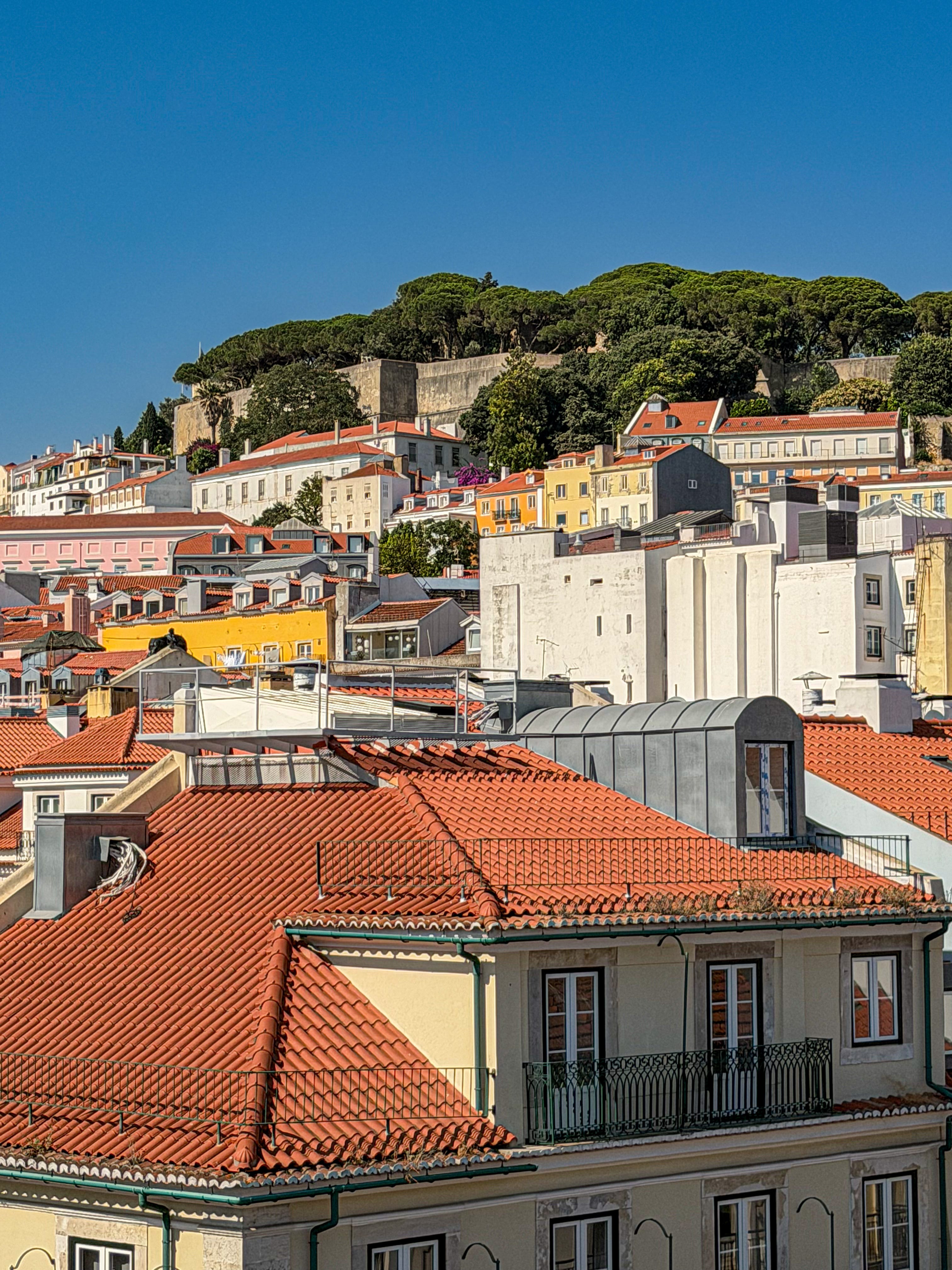
I started this post when I was in Lisbon, and then failed to publish it. I still don’t quite know what I have to say about my time there. Being out of the country for two weeks is a long time, and I had so many unique experiences and a range of emotions that I’m still putting it all together in my mind and heart.
I do know that I cried more easily in Lisbon.
I kept a list on my phone of the things that made me cry in Lisbon: poems, listening to the faculty of my program read, the moon, photos of my dog, hearing my mom cry on the phone that she misses me, gratefully recovering my phone after leaving it in a fitting room where I was trying on linen pants because it was SO HOT, my wife’s voice on the phone whenever I called, watching street performers sing, the beauty of the Tegus river, getting lost, fumbling with the lock on my Airbnb and thinking I couldn’t get inside, seeing my best friend’s face pop up on FaceTime, discussing my writing in a vulnerable way, when I arrived in and left Paris (I snuck away for a weekend — more on that soon!) and other things I won’t list here.
In the moment, I think being homesick and crying is painful; however, the aftermath of each surge of sadness was immense gratitude that I have a life I missed so deeply.
I used to identify as a crier. As I’ve gotten older, I’ve cried far less frequently than I once did. I am, generally, happier, but it’s also because on some level, I felt embarrassed about how often I used to cry. I trained it out of myself, save for the most tender discussions with the people I am closest to, moments when I’ve been filled with rage and can’t control my tears, or when sadness seemed “appropriate.”
I was happy to cry more while I was there. I missed the version of me that lets herself feel things to the point that tears come. I’m so glad to see her.
I went to Lisbon to write — or at least to engage in writerly life.
I was accepted into the Disquiet International Literary Program, and was lucky enough to get a spot in Emma Copley Eisenberg’s1 workshop. When I found out, I was surprised that I was accepted. Those who know me know that I’m always taken aback when I’m recognized/wanted/seen (yes, I’m working on it), but it felt especially shocking, as I have done barely any writing this year. Still, I applied because something told me I should.
I’ve spent a lot of time this year wondering if I can even call myself a writer or an artist or even vaguely creative anymore. I’ve wondered if, like crying, I’ve trained my creativity out of myself as my life has changed and shifted to include early morning workouts, the mental load of being a vice principal, and other things that have made it a challenge to focus. I worried that I’d wasted years on an MFA that I’d eventually leave on the shelf. I grappled with whether or not I deserved to invest in my creative life anymore, or if I deserved to be in Lisbon at all.
Thankfully, in addition to remembering the part of myself that needs to cry, I also remembered the part of me that needs to write. There is part of me that feels compelled to do so, who is convinced that I have things to say, who remembered that I write primarily to make sense of things first to myself, and then to the world.
I don’t know what it was about Lisbon: yes, the workshops, the people I met, being engaged with other writers. It was also been loneliness (at first) that eventually morphed into remembering how much I like to be alone, and how much alone time I require to truly engage with my work. It was been long walks alone, talks with Uber drivers, getting somewhat lost and figuring things out, the taste of new food, and having hours to sit, think, and write.
There’s something about unfamiliarity that makes us naturally creative, I think — it forces our hand. And it’s been awhile since I’ve done anything truly unfamiliar.
At one of the first faculty readings, brilliant, kind D/Annie Liontas was speaking about not being able to write for a time, and referred to it as a “spiritual drift.” They reminded us that when it’s like that, all we can do is hold on and let it pass.
I feel grateful that I held on long enough to see it pass.
More soon.
I’ll leave you with a few things:
Have you read my beloved Megan Stielstra’s new work yet? If not, do so immediately.
This Atlantic article about the end of reading was depressing. It made me consider my own reading habits.
The year is 2063 and you were never interesting. An absolute bummer that is actually a call to action. “You’re never going to be someone’s eccentric grandmother because you spent your best years consuming the lives of strangers.”
This dress has been the savior of my trip! Light, cute, the right length, can be dressed up or down. Perfect.
I feel endlessly lucky to be on earth at the same time Hanif Abdurraqib is writing poems.
Lisbon is BIG into seafood and tinned fish. They love a sardine! I haven’t tried anything I’ve loved more than my beloved Fishwife.
This linen tank was another essential part of my wardrobe on my trip, along with this skirt and these pants.
Two books I’ve loved recently: Transcription, by Ben Lerner and Whistler, by Ann Patchett (my forever queen).
My hair has been so dry, and this spray has been an absolute lifesaver.
You may recall me gushing over Emma’s novel, Housemates, after reading it in 2024.
I was in Lisbon last week!! Has anywhere on earth ever been so warm? I am so glad you got the chance to work with Emma, the most giving literary citizen. 🩵
Of COURSE you were accepted into the workshop and I’m so so happy you get on yourself to apply.
Also thank you for sharing Megan’s essay because it knocked the wind out of me. Gorgeous ❤️